



Hey there! I'm a supplier of Engineering Air Conditioning Copper Capillary Tubes, and today I want to chat about how altitude can affect the performance of these tubes. It's a topic that's super important in the engineering air - conditioning world, and I'm excited to share my insights with you.
First off, let's understand what these copper capillary tubes do. In air - conditioning systems, they play a crucial role in controlling the flow of refrigerant. They act as a restrictor, regulating the amount of refrigerant that enters the evaporator. This is key to maintaining the right temperature and efficiency of the whole system.
Now, when it comes to altitude, things start to get a bit tricky. At higher altitudes, the atmospheric pressure is lower. You've probably noticed this if you've ever been to a mountain. The air feels thinner, and things like boiling water happen at a lower temperature. Well, the same principle affects our engineering air - conditioning copper capillary tubes.
One of the main impacts of altitude on these tubes is related to the pressure drop across them. The pressure drop is what makes the refrigerant flow through the tube. At sea level, we have a certain standard atmospheric pressure, and the tubes are designed to work optimally under these conditions. But as we go up in altitude, the lower atmospheric pressure means that the pressure difference across the tube changes.
For instance, if the pressure drop across the tube is not adjusted properly, it can lead to an incorrect amount of refrigerant flowing through the system. If too much refrigerant flows, the evaporator might not be able to absorb all the heat effectively, reducing the cooling capacity of the air - conditioning unit. On the other hand, if too little refrigerant flows, the system won't be able to cool the space as it should.
Another aspect is the effect on the phase change of the refrigerant. Refrigerants change from liquid to gas as they absorb heat in the evaporator. The lower pressure at higher altitudes can affect this phase - change process. It might cause the refrigerant to boil at a lower temperature than it would at sea level. This can lead to issues like premature vaporization of the refrigerant in the capillary tube, which can disrupt the normal operation of the air - conditioning system.
Let's talk about how we, as a supplier, deal with these altitude - related challenges. We offer a variety of capillary tubes that are designed to handle different altitude conditions. For example, our Dual - Diameter TP2 Copper Capillary Tube is engineered to provide better flow control even at higher altitudes. The dual - diameter design allows for more precise regulation of the refrigerant flow, compensating for the changes in pressure due to altitude.
Our Reduced - Diameter Flared Copper Capillary Tube is another great option. The reduced diameter helps to increase the pressure drop across the tube, which can be beneficial at higher altitudes where the atmospheric pressure is lower. The flared end also ensures a better connection and more stable flow of the refrigerant.
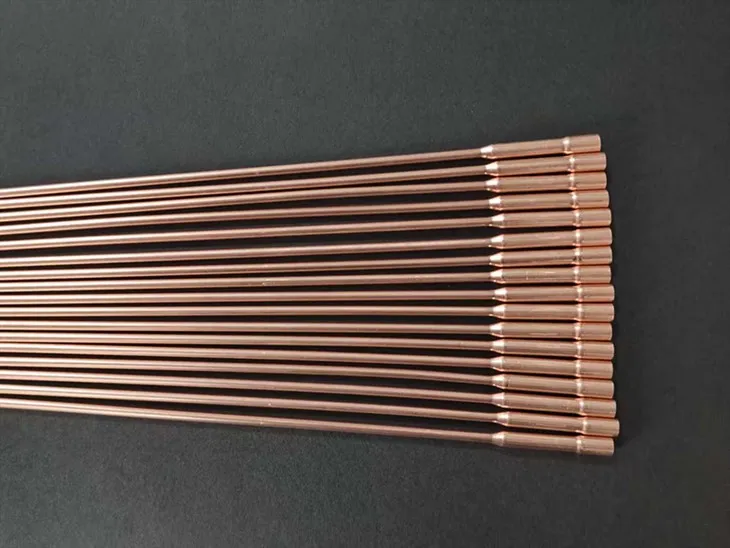

And then there's our Red Copper Variable - Diameter Swaged Capillary Tube. This tube is designed with a variable diameter, which can adapt to different pressure conditions. The swaging process gives it a stronger structure, making it more reliable in high - altitude environments.
When you're choosing a capillary tube for an air - conditioning system in a high - altitude area, it's important to consider the specific requirements of the system. You need to look at factors like the cooling capacity needed, the type of refrigerant used, and the altitude of the installation site. Our team of experts can help you make the right choice. We've got the knowledge and experience to recommend the best tube for your particular situation.
In addition to the design of the tubes, we also focus on the quality of the copper. We use high - grade copper that has excellent thermal conductivity and corrosion resistance. This ensures that the tubes can perform well over a long period, even in harsh environmental conditions.
To sum it up, altitude can have a significant impact on the performance of engineering air - conditioning copper capillary tubes. But with the right design and high - quality materials, we can overcome these challenges. Our range of capillary tubes is designed to meet the needs of air - conditioning systems at different altitudes.
If you're in the market for engineering air - conditioning copper capillary tubes, whether for a project at sea level or in a high - altitude area, we're here to help. We can provide you with detailed information about our products and assist you in making the best selection. Feel free to reach out to us for more details and to start a procurement discussion.
References:
- "Fundamentals of Air - Conditioning and Refrigeration" by R. C. Webb
- "Heat Transfer in Air - Conditioning Systems" by J. S. Kim
- "Engineering Applications of Copper Tubes in Refrigeration" by the Copper Development Association


