



Hey there! As a supplier of shaped capillary tubes, I'm super stoked to dive into how these nifty little tubes work. Shaped capillary tubes are pretty amazing, and they've got a wide range of applications in various industries. So, let's get right into it!
The Basics of Capillary Action
First off, we need to understand capillary action. Capillary action is the ability of a liquid to flow in narrow spaces without the assistance of, or even in opposition to, external forces like gravity. It happens because of two main forces: adhesion and cohesion.
Adhesion is the attraction between the liquid molecules and the walls of the tube. Cohesion, on the other hand, is the attraction between the liquid molecules themselves. When you put a capillary tube into a liquid, the adhesive forces between the liquid and the tube's walls pull the liquid up the tube. The cohesive forces within the liquid then help to keep the liquid column together.
How Shaped Capillary Tubes Differ
Regular capillary tubes are usually straight and have a uniform diameter. But shaped capillary tubes are, well, shaped! They can have different cross - sectional shapes, like rectangular, triangular, or even more complex geometries. And they can also have variable diameters along their length.
The shape and variable diameter of these tubes can have a big impact on how the liquid flows through them. For example, a tube with a smaller diameter will generally have a stronger capillary action because the adhesive forces have a relatively larger effect compared to the volume of the liquid.
Applications of Shaped Capillary Tubes
Shaped capillary tubes are used in a bunch of different industries. In the medical field, they're used for things like blood sampling. The shape of the tube can be designed to control the flow rate of the blood, making it easier to collect an accurate sample.
In the electronics industry, these tubes can be used for micro - fluidic devices. They can transport small amounts of liquid, like cooling fluids or chemical reagents, with great precision.
Working Mechanism in Detail
Let's talk about how the liquid actually moves through a shaped capillary tube. When the tube is placed in a liquid, the liquid starts to rise up the tube due to capillary action. The shape of the tube affects the way the liquid spreads and moves.
For a tube with a variable diameter, the liquid will move faster in the narrower sections. This is because the capillary forces are stronger in these areas. As the liquid moves through the tube, it may encounter different cross - sectional shapes, which can cause it to change direction or spread out in a specific way.
Our Product Range
As a supplier, we offer a variety of shaped capillary tubes. One of our popular products is the Sleeved Aluminum Capillary Tube. This tube has a sleeve around it, which can provide additional protection and insulation. It's great for applications where the tube needs to be protected from external factors.
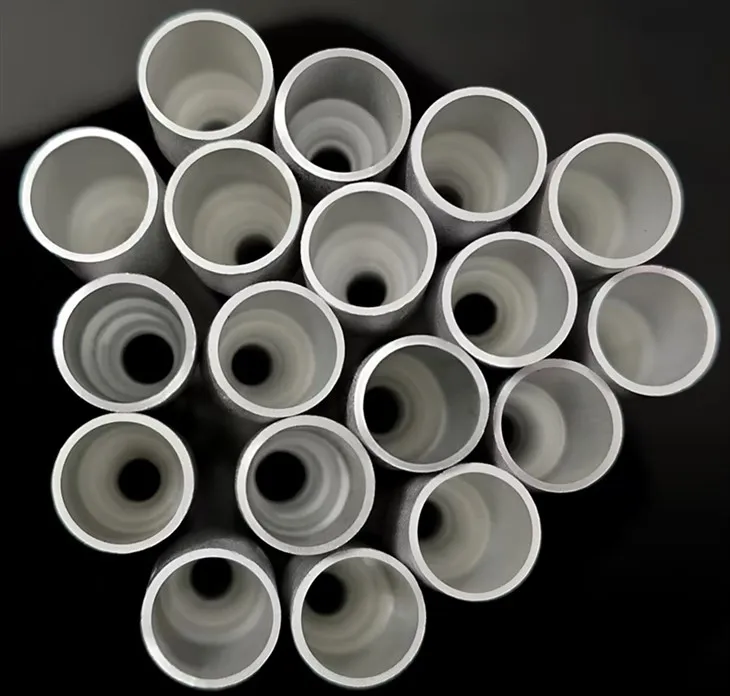
We also have the Aluminum Variable - Diameter Capillary Tube. This tube has a changing diameter along its length, which allows for precise control of the liquid flow.
And then there's the Aluminum Variable - Diameter Swaged Capillary Tube. The swaging process gives the tube a unique shape, which can be very useful for specific applications.
Factors Affecting Capillary Action in Shaped Tubes
There are a few factors that can affect how a shaped capillary tube works. The material of the tube is one of them. Different materials have different surface properties, which can affect the adhesive forces between the liquid and the tube.
The surface tension of the liquid also plays a role. Liquids with higher surface tension will generally have a stronger capillary action. The temperature can also have an impact. As the temperature increases, the surface tension of the liquid usually decreases, which can affect the capillary action.
Real - World Examples
Let's look at a real - world example of how shaped capillary tubes are used. In a lab setting, a shaped capillary tube can be used to separate different components of a liquid mixture. The different shapes and diameters of the tube can cause the components to move at different speeds, allowing for separation.
In a cooling system, a shaped capillary tube can be used to transport a coolant. The shape of the tube can be designed to optimize the flow of the coolant, ensuring efficient cooling.
Design Considerations
When designing a shaped capillary tube, there are several things to consider. The shape and diameter of the tube need to be carefully chosen based on the application. For example, if you need a high flow rate, you might choose a tube with a larger diameter.

The material of the tube also needs to be selected based on the properties of the liquid it will be transporting. If the liquid is corrosive, you'll need to choose a material that is resistant to corrosion.
Quality Control
As a supplier, we take quality control very seriously. We make sure that our shaped capillary tubes are manufactured to the highest standards. We test each tube to ensure that it has the right dimensions and that the capillary action works as expected.
We also use advanced manufacturing techniques to ensure the consistency of our products. This means that you can rely on our tubes to perform consistently in your applications.
Why Choose Our Shaped Capillary Tubes
There are a few reasons why you should choose our shaped capillary tubes. First of all, we have a wide range of products to choose from. Whether you need a simple straight tube or a complex shaped tube, we've got you covered.
Secondly, our tubes are made from high - quality materials. We use aluminum, which is lightweight, durable, and resistant to corrosion. This means that our tubes will last a long time and perform well in various environments.
Finally, we offer excellent customer service. If you have any questions or need help choosing the right tube for your application, our team is here to assist you.
Contact Us for Procurement
If you're interested in purchasing our shaped capillary tubes, we'd love to hear from you. We can provide you with more information about our products, including pricing and delivery options. Just reach out to us, and we'll start the procurement process.
References
- Principles of Capillary Action, Physics Textbook
- Applications of Shaped Capillary Tubes in Micro - fluidics, Journal of Micro - fluidic Research
- Manufacturing Techniques for Shaped Capillary Tubes, Industrial Manufacturing Journal


