



As a supplier of Instrumentation Straight Copper Capillary Tubes, I often get asked about the radiation resistance properties of these tubes. It's an important question, especially in industries where radiation is a concern, like nuclear power, aerospace, and medical imaging. So, let's dig into what makes our copper capillary tubes a top choice when it comes to radiation resistance.
Understanding Radiation and Its Impact
Before we talk about how our tubes resist radiation, we need to understand what radiation is and why it can be a problem. Radiation is the emission of energy as electromagnetic waves or as moving subatomic particles, especially high - energy particles that cause ionization. There are different types of radiation, such as alpha, beta, gamma, and neutron radiation. Each type has different characteristics and can affect materials in various ways.
When radiation interacts with a material, it can cause damage at the atomic and molecular levels. For example, high - energy particles can knock atoms out of their positions in the material's lattice structure, creating defects. These defects can change the physical and chemical properties of the material over time, leading to issues like brittleness, corrosion, and loss of electrical conductivity.
Why Copper?
Copper has some unique properties that make it a great material for radiation - resistant applications. First off, copper is a good conductor of both heat and electricity. This means that when radiation hits the copper capillary tube, the energy can be dissipated quickly through conduction, reducing the risk of localized heating and damage.
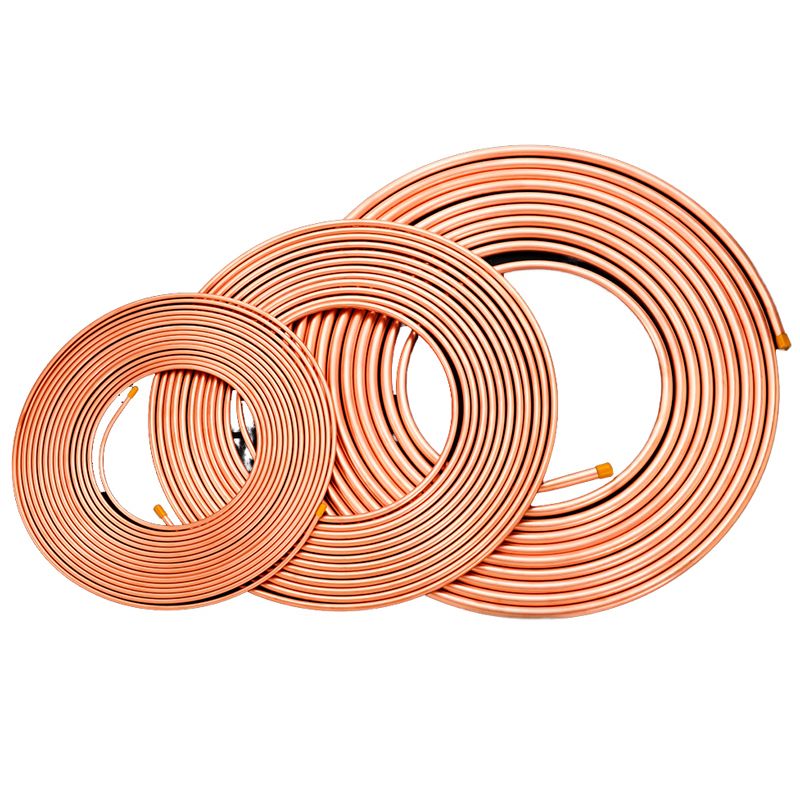

Secondly, copper has a relatively high density compared to some other metals. The density helps in absorbing and scattering radiation. When radiation enters the copper, it collides with the copper atoms. The more atoms there are in a given volume (higher density), the more likely the radiation is to interact with the material and lose its energy.
Our Instrumentation Straight Copper Capillary Tubes
We offer a range of Instrumentation Straight Copper Capillary Tubes, each with its own set of features and benefits. Let's take a closer look at some of our popular products:
-
Hard - State TU1 Copper Capillary Straight Tube: This tube is made from high - purity TU1 copper in a hard state. The hard state gives it excellent mechanical strength, which is important in radiation - prone environments where the tube may be subject to mechanical stress. The high - purity copper ensures that there are fewer impurities that could be affected by radiation.
-
Precision Straight Copper Capillary: As the name suggests, this tube is manufactured with high precision. The precise dimensions allow for accurate flow control in systems where the tube is used. When it comes to radiation resistance, the uniform structure of the tube helps in evenly distributing the effects of radiation, minimizing the formation of localized damage.
-
Precision Metering Copper Capillary Tube: Ideal for applications where precise fluid metering is required. Similar to the precision straight copper capillary, its uniform structure contributes to its ability to withstand radiation. The metering function remains consistent even in environments with radiation exposure.
-
Straight Soft Copper Capillary Tube: The soft state of this tube makes it more flexible, which can be useful in installation and in applications where some degree of bending is required. The flexibility doesn't compromise its radiation - resistance properties. The copper still effectively absorbs and scatters radiation.
-
Hard Temper Red Copper Capillary Tube: The hard temper gives it enhanced durability. Red copper is known for its good corrosion resistance in addition to its radiation - absorbing capabilities. It can withstand harsh environmental conditions and radiation exposure simultaneously.
Radiation Resistance Mechanisms in Our Tubes
In our copper capillary tubes, there are several mechanisms at work to resist radiation. One of the main ones is absorption. When radiation enters the tube, the copper atoms absorb the energy of the radiation. For example, gamma rays can be absorbed by the electrons in the copper atoms. This absorption process reduces the intensity of the radiation passing through the tube.
Scattering is another important mechanism. When radiation particles collide with copper atoms, they can change direction. This scattering spreads out the radiation, reducing the concentration of energy in one area. This helps protect the tube from localized damage.
The crystal structure of copper also plays a role. Our tubes are manufactured to have a well - ordered crystal structure. This ordered structure is more resistant to the formation of radiation - induced defects. When radiation tries to displace atoms, the orderly arrangement of the crystal lattice can help the displaced atoms to return to their original positions, minimizing the long - term damage.
Testing and Quality Assurance
We take the radiation resistance of our tubes seriously. We conduct rigorous testing on all our products to ensure they meet the highest standards. Our testing includes exposing the tubes to different types and intensities of radiation in a controlled environment. We then measure the changes in the physical and chemical properties of the tubes, such as hardness, electrical conductivity, and corrosion resistance.
Based on the test results, we continuously improve our manufacturing processes to enhance the radiation - resistance properties of our tubes. We also keep up with the latest research in radiation - resistant materials to stay at the forefront of this field.
Applications
Our Instrumentation Straight Copper Capillary Tubes with excellent radiation - resistance properties are used in a wide range of applications. In the nuclear power industry, they are used in instrumentation systems to measure and control various parameters. The tubes can withstand the high levels of radiation in the reactor environment without significant degradation.
In aerospace, our tubes are used in on - board systems where radiation from cosmic rays can be a concern. The tubes ensure the reliable operation of instruments and sensors, even in the harsh radiation environment of space.
In medical imaging, such as in CT scanners and PET scanners, our tubes are used in fluid delivery and control systems. The radiation - resistance properties ensure the long - term performance of these systems, which are crucial for accurate medical diagnoses.
Contact Us for Your Needs
If you're looking for high - quality Instrumentation Straight Copper Capillary Tubes with excellent radiation - resistance properties, we're here to help. Our products are designed to meet the demanding requirements of various industries. Whether you need a small quantity for a research project or a large - scale supply for an industrial application, we can provide you with the right solution.
Get in touch with us to discuss your specific needs and start a procurement process. We're ready to work with you to ensure you get the best products for your applications.
References
- "Radiation Effects in Materials" by Michael Nastasi, John W. Mayer, and Sumio Tsunami
- "Copper and Copper Alloys: Properties and Applications" by ASM International


