



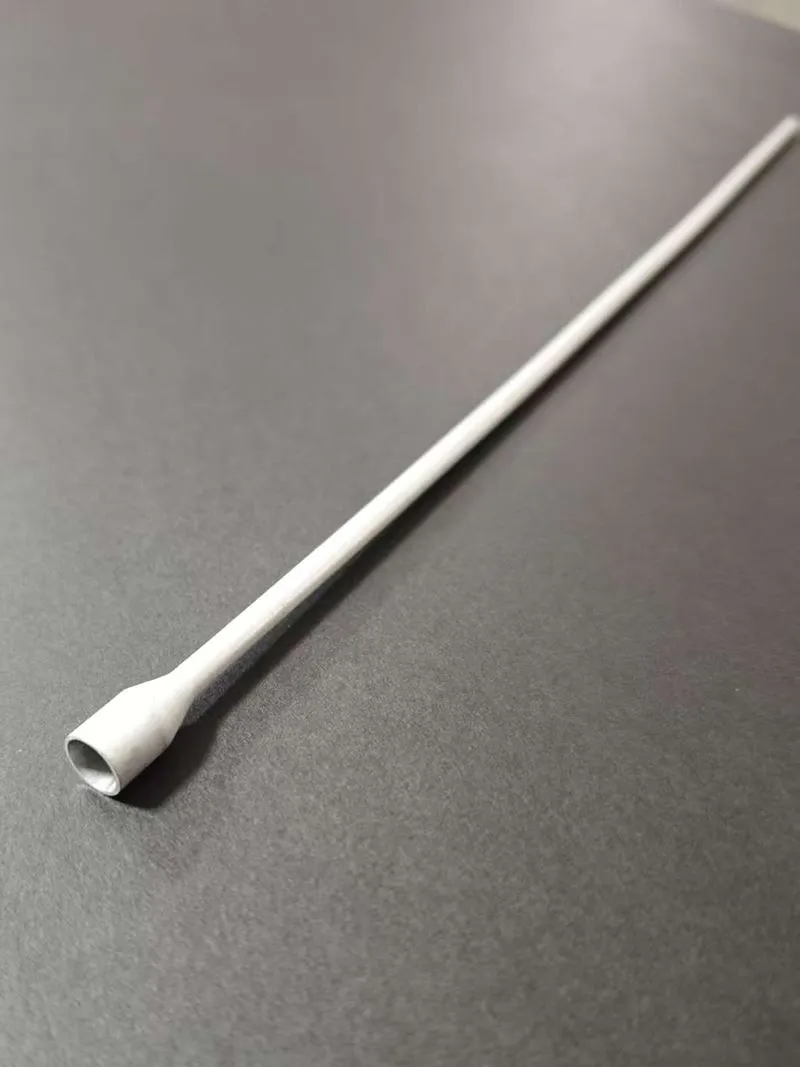
Hey there! As a supplier of Reduced-End Aluminum Capillary Tubes, I'm super stoked to share with you all the cool applications these little wonders have.
1. Refrigeration and Air Conditioning Systems
Reduced-End Aluminum Capillary Tubes play a crucial role in refrigeration and air conditioning systems. In small refrigeration equipment, these tubes are used for their precise flow control. The reduced end helps in regulating the refrigerant flow, ensuring that the cooling process is efficient. For instance, a Small Refrigeration Equipment Flared Aluminum Capillary Tube is designed to fit perfectly in compact refrigerators and freezers.
In automotive air conditioning systems, the Automotive Air Conditioning Flared Aluminum Capillary Tube is a key component. The reduced end of the tube allows for a smooth and controlled flow of the refrigerant, which is essential for maintaining the right temperature inside the vehicle. This helps in providing a comfortable driving experience, especially during hot summer days.
2. Heat Exchangers
Heat exchangers are another area where Reduced-End Aluminum Capillary Tubes shine. These tubes are used to transfer heat between two fluids. The reduced end of the tube can increase the velocity of the fluid, which in turn enhances the heat transfer efficiency. In industrial heat exchangers, the Aluminum Variable-Diameter Swaged Capillary Tube is often used. The variable diameter design allows for better control of the fluid flow and heat transfer, making it suitable for a wide range of applications.
3. Medical Devices
In the medical field, Reduced-End Aluminum Capillary Tubes are used in various devices. For example, in some diagnostic equipment, these tubes are used to transport small amounts of fluids with high precision. The reduced end ensures that the fluid flow is accurate and consistent, which is crucial for obtaining reliable test results. The Flared 3003 Aluminum Capillary Tube is often used in medical applications due to its high corrosion resistance and good mechanical properties.
4. Aerospace and Aviation
The aerospace and aviation industries also benefit from Reduced-End Aluminum Capillary Tubes. These tubes are used in fuel systems, hydraulic systems, and environmental control systems. In fuel systems, the reduced end helps in controlling the fuel flow, ensuring that the engine receives the right amount of fuel at the right time. In hydraulic systems, the tubes are used to transfer hydraulic fluid, which is essential for operating various components such as landing gears and flight controls. The Reduced-End Aluminum Capillary Tube is lightweight and has good corrosion resistance, making it an ideal choice for aerospace applications.
5. Electronics
In the electronics industry, Reduced-End Aluminum Capillary Tubes are used for heat dissipation. These tubes can be used to transfer heat from electronic components to a heat sink. The reduced end of the tube can increase the heat transfer rate, which helps in keeping the electronic components cool. This is especially important for high-performance electronics such as computers and servers, where overheating can lead to reduced performance and even damage.
Why Choose Our Reduced-End Aluminum Capillary Tubes?
We take pride in offering high-quality Reduced-End Aluminum Capillary Tubes. Our tubes are made from high-grade aluminum, which ensures good mechanical properties and corrosion resistance. We use advanced manufacturing techniques to produce tubes with precise dimensions and smooth surfaces. This ensures that the tubes have a long service life and perform well in various applications.
If you're in the market for Reduced-End Aluminum Capillary Tubes, we'd love to have a chat with you. Whether you need tubes for refrigeration, heat exchangers, medical devices, aerospace, or electronics, we've got you covered. Just reach out to us, and we'll work together to find the perfect solution for your needs.

References
- "Handbook of Refrigeration Technology"
- "Aerospace Materials and Processes"
- "Medical Device Design and Development"
- "Electronics Cooling Handbook"


