



As a supplier of shaped copper capillary tubes, I've encountered numerous cases of leakage in these tubes. Leakage can be a significant problem, not only leading to product inefficiency but also potentially causing safety hazards. In this blog, I'll explore the possible reasons for leakage in shaped copper capillary tubes.
1. Manufacturing Defects
1.1 Imperfect Seam Welding
During the manufacturing process of some shaped copper capillary tubes, seam welding is used to join different parts. If the welding process is not carried out correctly, it can lead to weak spots in the tube. For example, insufficient heat input during welding may result in incomplete fusion of the copper, creating tiny gaps. These gaps can gradually expand under pressure, eventually causing leakage.
1.2 Inconsistent Wall Thickness
The wall thickness of a capillary tube should be uniform to ensure its structural integrity. However, due to issues in the manufacturing equipment or process control, there may be variations in the wall thickness. Areas with thinner walls are more prone to rupture under pressure. For instance, in a Dual-Diameter TP2 Copper Capillary Tube, if the transition area between the two diameters has an uneven wall thickness, it can become a weak point for leakage.
1.3 Surface Imperfections
Scratches, dents, or cracks on the surface of the capillary tube can also contribute to leakage. These surface defects can act as stress concentrators, making the tube more likely to fail under pressure. For example, during the handling and transportation of Sleeved TP2 Copper Capillary Tube, improper handling can cause scratches on the tube surface, which may lead to leakage over time.
2. Material Issues
2.1 Low-Quality Copper
The quality of the copper used in the capillary tube is crucial. Low-quality copper may contain impurities such as sulfur, oxygen, or other non-metallic inclusions. These impurities can reduce the mechanical properties of the copper, making it more brittle and prone to cracking. For example, if the copper used in a Red Copper Variable-Diameter Swaged Capillary Tube has a high sulfur content, it can form brittle sulfide compounds, which can cause the tube to crack and leak.
2.2 Material Degradation
Over time, the copper material in the capillary tube can degrade due to various factors. Oxidation is one of the most common forms of material degradation. When copper is exposed to oxygen and moisture, it forms copper oxide on the surface. This oxide layer can gradually grow and penetrate into the tube, weakening the structure and leading to leakage. Additionally, exposure to certain chemicals or corrosive environments can also cause material degradation. For example, in a chemical processing plant, the Flared TP2 Copper Capillary Tube may be exposed to acidic or alkaline substances, which can corrode the copper and cause leakage.
3. Installation and Assembly Problems
3.1 Improper Bending
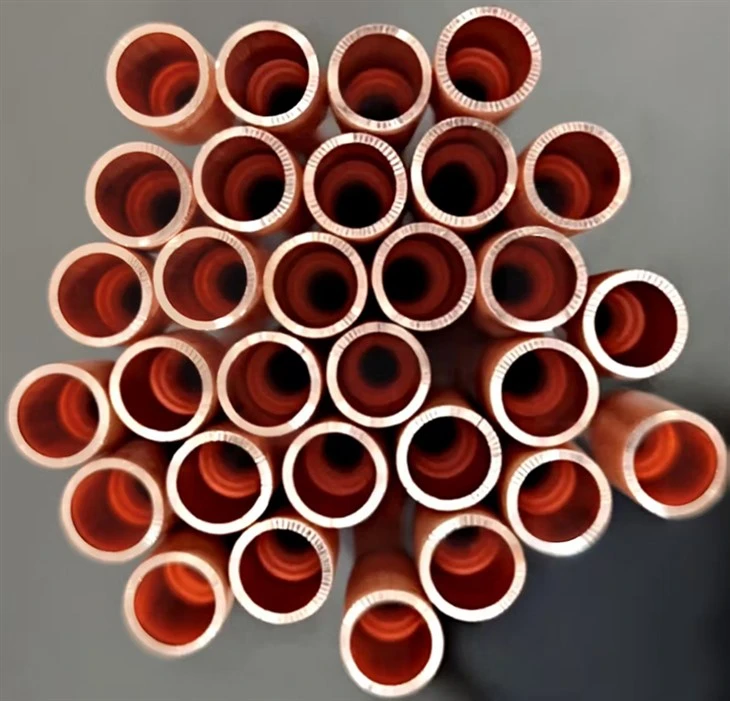
When installing shaped copper capillary tubes, bending is often required to fit the specific application. However, if the bending process is not carried out correctly, it can cause damage to the tube. Over-bending can lead to excessive stress on the tube wall, causing cracks or even fractures. For example, if a Reduced-End TP2 Copper Capillary Tube is bent too sharply, the reduced end may be damaged, resulting in leakage.

3.2 Incorrect Connection
The connection between the capillary tube and other components is critical. If the connection is not properly made, it can lead to leakage. For example, if the tube is not tightly connected to a fitting or valve, there may be gaps that allow fluid to escape. Additionally, using incompatible fittings or improper sealing materials can also cause leakage. For instance, if a rubber seal is used in a high-temperature application where it is not suitable, it may deteriorate and cause leakage.
3.3 Vibration and Movement
During operation, the capillary tube may be subjected to vibration and movement. If the tube is not properly secured, these vibrations and movements can cause stress on the tube, leading to fatigue and eventual leakage. For example, in a machine with a lot of moving parts, the capillary tube may be constantly shaken, which can weaken the tube structure over time.
4. Operating Conditions
4.1 High Pressure
Capillary tubes are designed to operate within a certain pressure range. If the operating pressure exceeds the design limit, it can cause the tube to rupture. High pressure can also exacerbate existing defects in the tube, such as weak spots or cracks, leading to leakage. For example, in a high-pressure hydraulic system, the Dual-Diameter TP2 Copper Capillary Tube may be subjected to pressures that are too high for its design, resulting in leakage.
4.2 Temperature Fluctuations
Temperature fluctuations can also affect the performance of the capillary tube. When the temperature changes, the copper material expands and contracts. If the tube is not designed to withstand these temperature variations, it can cause stress on the tube wall, leading to cracking and leakage. For example, in an environment with large temperature differences between day and night, the Sleeved TP2 Copper Capillary Tube may experience repeated expansion and contraction, which can damage the tube over time.
4.3 Fluid Compatibility
The fluid flowing through the capillary tube must be compatible with the copper material. Some fluids may react with the copper, causing corrosion or other forms of damage. For example, if a capillary tube is used to transport a fluid containing chloride ions, the chloride can react with the copper, forming copper chloride and causing corrosion. This corrosion can lead to leakage over time.
Conclusion
Leakage in shaped copper capillary tubes can be caused by a variety of factors, including manufacturing defects, material issues, installation and assembly problems, and operating conditions. As a supplier, it is our responsibility to ensure the quality of our products and provide proper guidance to our customers on installation and operation. By understanding the possible reasons for leakage, we can take appropriate measures to prevent it and ensure the reliable performance of our shaped copper capillary tubes.
If you are interested in purchasing our shaped copper capillary tubes or have any questions about leakage prevention, please feel free to contact us for further discussion and procurement negotiation.
References
- Smith, J. (2018). Copper Tube Handbook. Publisher Name.
- Johnson, A. (2019). Manufacturing Processes for Capillary Tubes. Journal of Manufacturing Technology, 25(3), 123-135.
- Brown, C. (2020). Material Degradation in Copper Components. Materials Science Review, 15(2), 78-90.


