



What is the elasticity of the Red Copper Variable - Diameter Swaged Capillary Tube?
As a supplier of Red Copper Variable - Diameter Swaged Capillary Tubes, I've had numerous inquiries about the elasticity of these remarkable products. In this blog, I'll delve into the concept of elasticity in the context of red copper variable - diameter swaged capillary tubes, exploring its significance, factors influencing it, and practical implications.
Understanding Elasticity
Elasticity is a fundamental property of materials, which describes the ability of a material to deform under stress and return to its original shape when the stress is removed. For red copper variable - diameter swaged capillary tubes, elasticity is crucial as it determines how well the tubes can withstand various mechanical forces during installation, operation, and in different environments.

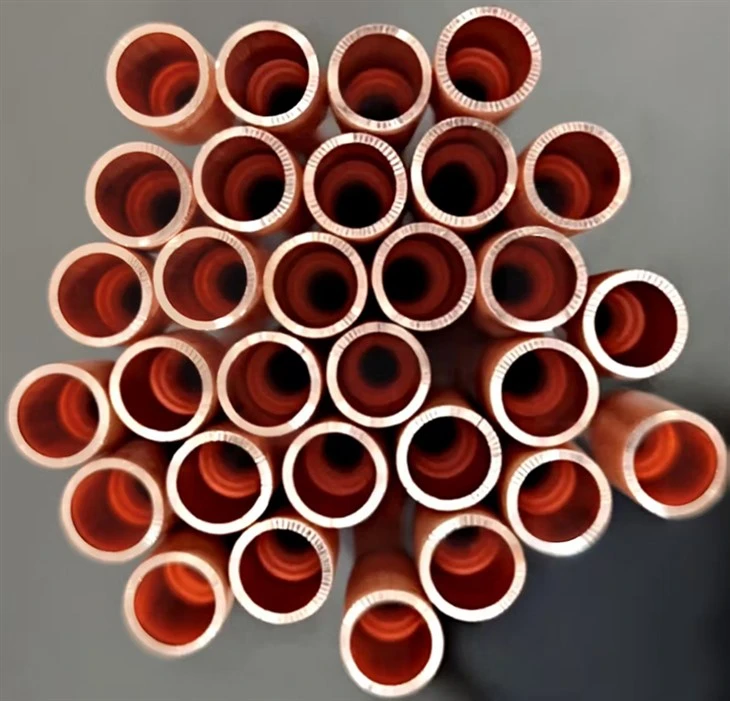
The elasticity of a material is typically measured by its Young's modulus, which is the ratio of stress (force per unit area) to strain (deformation per unit length). A higher Young's modulus indicates a stiffer material, while a lower one means the material is more flexible. Red copper, known for its excellent ductility and malleability, has a relatively low Young's modulus compared to some other metals, which gives it good elasticity.
Factors Influencing the Elasticity of Red Copper Variable - Diameter Swaged Capillary Tubes
- Copper Purity: The purity of the red copper used in the capillary tubes plays a significant role in determining its elasticity. Higher - purity copper generally has better elasticity because impurities can disrupt the crystal structure of the metal, reducing its ability to deform and recover. Our Red Copper Variable - Diameter Swaged Capillary Tubes are made from high - purity red copper, ensuring optimal elasticity.
- Diameter and Wall Thickness: The variable - diameter design of these capillary tubes can affect their elasticity. Tubes with larger diameters and thinner walls are generally more flexible than those with smaller diameters and thicker walls. The swaging process used to create the variable - diameter tubes can also influence the distribution of stress within the tube, affecting its overall elasticity.
- Manufacturing Process: The manufacturing process, including the swaging technique and heat treatment, can have a profound impact on the elasticity of the capillary tubes. Proper heat treatment can relieve internal stresses in the copper, enhancing its elasticity. Our advanced manufacturing processes ensure that the Red Copper Variable - Diameter Swaged Capillary Tubes have consistent and reliable elasticity.
Practical Implications of Elasticity in Red Copper Variable - Diameter Swaged Capillary Tubes
- Installation: The elasticity of the tubes makes them easier to install. They can be bent and shaped to fit different configurations without breaking, which is particularly important in applications where space is limited or complex piping systems are required. For example, in refrigeration and air - conditioning systems, the ability to bend the tubes to fit around other components is essential.
- Vibration and Shock Resistance: In applications where the tubes are subject to vibrations and shocks, such as in automotive or industrial machinery, the elasticity of the red copper variable - diameter swaged capillary tubes allows them to absorb and dissipate energy. This helps to prevent damage to the tubes and the overall system, ensuring long - term reliability.
- Fluid Flow: The elasticity of the tubes can also affect fluid flow within them. When the tubes are subjected to pressure changes, their elastic deformation can help to maintain a stable flow rate. This is crucial in applications such as fuel injection systems or hydraulic circuits.
Comparison with Other Types of Capillary Tubes
There are other types of capillary tubes available in the market, such as Flared TP2 Copper Capillary Tube, Dual - Diameter TP2 Copper Capillary Tube, and Triple - Diameter TP2 Copper Capillary Tube. While these tubes may have different shapes and diameters, the elasticity of red copper variable - diameter swaged capillary tubes gives them unique advantages.
The variable - diameter design of our tubes allows for more flexibility in adapting to different flow requirements and installation conditions. The elasticity ensures that the tubes can withstand the stresses associated with these variations, providing a more reliable and efficient solution compared to some other types of capillary tubes.
Conclusion
The elasticity of Red Copper Variable - Diameter Swaged Capillary Tubes is a critical property that offers numerous benefits in various applications. From ease of installation to enhanced vibration and shock resistance, the elasticity of these tubes makes them a preferred choice for many industries.
If you're interested in learning more about our Red Copper Variable - Diameter Swaged Capillary Tubes or have any questions regarding their elasticity and applications, we encourage you to reach out to us for a detailed discussion. We're here to provide you with the best solutions for your specific needs.
References
- Callister, W. D., & Rethwisch, D. G. (2018). Materials Science and Engineering: An Introduction. Wiley.
- ASM Handbook Committee. (2000). ASM Handbook, Volume 2: Properties and Selection: Nonferrous Alloys and Special - Purpose Materials. ASM International.


