



Hey there! As a supplier of Precision Equipment Copper Capillary Tubes, I often get asked about the elongation rate of these tubes. So, I thought I'd take a moment to share some insights on this topic.
First off, let's understand what the elongation rate is. Elongation rate refers to the percentage increase in the length of a material when it's subjected to a tensile force until it breaks. In the case of copper capillary tubes, this is a crucial factor as it indicates the tube's ductility and its ability to withstand deformation without breaking.
The elongation rate of precision equipment copper capillary tubes can vary depending on several factors. One of the main factors is the type of copper used. For example, TP2 copper is a common choice for capillary tubes. The Hard - State TP2 Copper Capillary Straight Tube has its own unique elongation characteristics. Hard - state copper generally has a lower elongation rate compared to soft - state copper because the hardening process makes the material more rigid.
Another factor that affects the elongation rate is the manufacturing process. Precision manufacturing techniques can ensure that the tubes have a more uniform structure, which in turn can lead to a more consistent elongation rate. Our company uses state - of - the - art manufacturing processes to produce high - quality copper capillary tubes. This helps us maintain a reliable elongation rate for our products.
The diameter and wall thickness of the capillary tubes also play a role in determining the elongation rate. Smaller diameter tubes may have different elongation properties compared to larger ones. Thinner - walled tubes might be more flexible and have a higher elongation rate, while thicker - walled tubes could be more rigid and have a lower elongation rate.

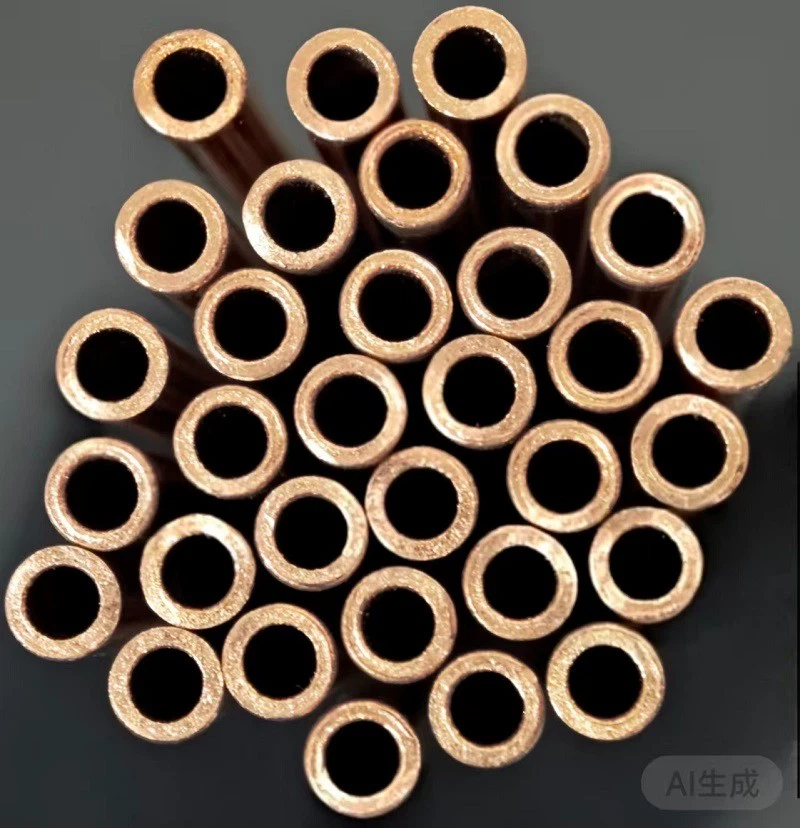
In the industry, the elongation rate is usually measured according to specific standards. For copper capillary tubes, these standards ensure that the tubes meet the requirements for various applications. For instance, in the air - conditioning industry, Engineering Air Conditioning Copper Capillary Tubes need to have a certain elongation rate to ensure they can be bent and installed without breaking.
Let's talk about the practical implications of the elongation rate. A high elongation rate means that the tube can be stretched to a greater extent without breaking. This is particularly useful in applications where the tube needs to be bent or shaped. For example, in precision equipment, the tubes may need to be routed through tight spaces or around other components. A tube with a high elongation rate can be easily manipulated into the required shape.
On the other hand, a lower elongation rate might be preferred in some cases. For example, if the tube needs to maintain its shape under high stress or pressure, a tube with a lower elongation rate can provide more stability.
Now, let's take a look at some real - world data. In general, the elongation rate of precision equipment copper capillary tubes can range from around 20% to 40%. However, this can vary based on the factors we've discussed earlier. For our Precision Throttling Straight Copper Capillary Tube, we strive to maintain an elongation rate within a specific range to ensure consistent performance.
We understand that different customers have different requirements when it comes to the elongation rate of copper capillary tubes. Whether you need a tube with a high elongation rate for easy bending or a lower one for stability, we can work with you to find the right solution.
If you're in the market for precision equipment copper capillary tubes, we'd love to have a chat with you. We can discuss your specific needs, including the desired elongation rate, and provide you with samples to test. Our team of experts is always ready to answer your questions and help you make the best choice for your application.
So, if you're interested in learning more about our products or have any questions about the elongation rate of copper capillary tubes, don't hesitate to reach out. We're here to help you find the perfect solution for your precision equipment needs.
References:
- Industry standards for copper capillary tubes
- Internal research and testing data from our manufacturing process.


