



In the field of fluid conveyance and mechanical engineering, the choice of materials and components for high - pressure applications is crucial. As a supplier of Red Copper Variable - Diameter Swaged Capillary Tubes, I am often asked whether these tubes are suitable for high - pressure scenarios. In this blog, I will delve into the characteristics of red copper variable - diameter swaged capillary tubes and analyze their applicability in high - pressure applications.

Properties of Red Copper
Red copper, also known as pure copper, is a metal with excellent physical and chemical properties. It has high electrical and thermal conductivity, good ductility, and corrosion resistance. These properties make red copper a popular choice in many industries, including electrical, plumbing, and refrigeration.
The high thermal conductivity of red copper is particularly beneficial in heat - transfer applications. For example, in a refrigeration system, the ability to transfer heat efficiently can improve the overall performance of the system. The good ductility allows red copper to be easily formed into various shapes, such as the variable - diameter swaged capillary tubes. This means that complex geometries can be created to meet specific design requirements.
Variable - Diameter Swaged Capillary Tubes
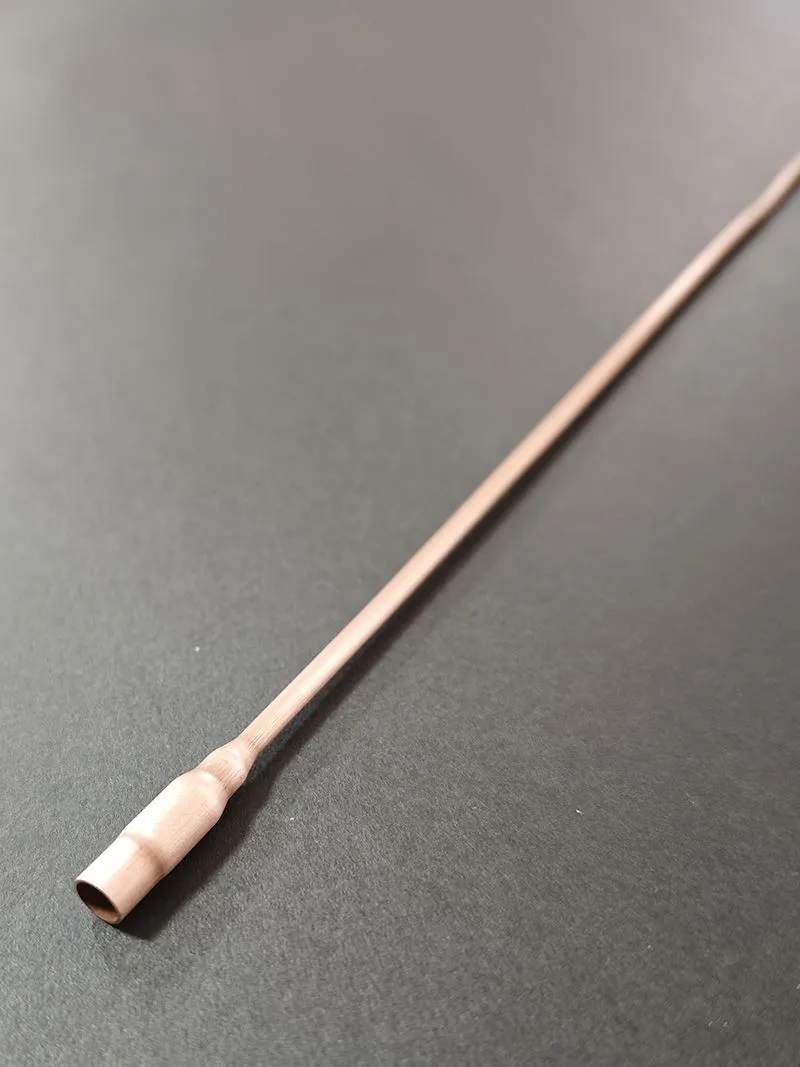
Variable - diameter swaged capillary tubes are a type of tube that has a changing internal diameter along its length. The swaging process involves shaping the tube by applying pressure to reduce or increase its diameter. This results in a tube with a unique structure that can offer several advantages.
One of the main advantages of variable - diameter swaged capillary tubes is their ability to control the flow of fluids. The changing diameter can create different flow rates and pressures within the tube. This is useful in applications where precise flow control is required, such as in fuel injection systems or hydraulic circuits.
Suitability for High - Pressure Applications
When considering the suitability of red copper variable - diameter swaged capillary tubes for high - pressure applications, several factors need to be taken into account.
Material Strength
Red copper has a relatively high tensile strength, which is an important factor in withstanding high pressures. However, compared to some other metals like steel, its strength is lower. In very high - pressure applications, the tube may need to be thick - walled to ensure it can handle the pressure without bursting. The swaging process can also affect the strength of the tube. If the swaging is done incorrectly, it may create weak points in the tube, reducing its overall pressure - bearing capacity.
Sealing Performance
In high - pressure applications, a good sealing performance is essential to prevent leaks. Red copper has good malleability, which means it can form a tight seal when properly connected. The variable - diameter design can also be beneficial in creating a better seal, as the changing diameter can help to distribute the pressure evenly at the connection points. However, the quality of the connection and the sealing materials used are also crucial factors.
Corrosion Resistance
High - pressure applications often involve harsh environments, and corrosion can significantly reduce the lifespan of the tube. Red copper has good corrosion resistance, especially in non - aggressive environments. However, in environments with high levels of chemicals or moisture, additional protection may be required. For example, a protective coating can be applied to the tube to enhance its corrosion resistance.
Fatigue Resistance
In high - pressure applications, the tube may be subjected to cyclic loading, which can lead to fatigue failure. Red copper has a certain degree of fatigue resistance, but it may not be as good as some other materials. The variable - diameter design can also affect the fatigue resistance. If the diameter changes too abruptly, it may create stress concentrations, increasing the risk of fatigue failure.
Case Studies
To further illustrate the suitability of red copper variable - diameter swaged capillary tubes for high - pressure applications, let's look at some case studies.
In a hydraulic system for a construction machine, red copper variable - diameter swaged capillary tubes were used to control the flow of hydraulic fluid. The system operated at a relatively high pressure, and the tubes were required to withstand the pressure without leaking. After several months of operation, the tubes showed good performance, with no signs of leakage or significant deformation. The variable - diameter design allowed for precise flow control, which improved the overall efficiency of the hydraulic system.
In a refrigeration system, red copper variable - diameter swaged capillary tubes were used to transfer refrigerant. The system operated at a high pressure, and the tubes needed to be able to handle the pressure while also transferring heat efficiently. The high thermal conductivity of red copper and the variable - diameter design helped to improve the heat - transfer performance of the system. However, in some cases, the tubes were found to be susceptible to corrosion in areas with high humidity. This highlighted the importance of proper corrosion protection in high - pressure applications.
Comparison with Other Types of Capillary Tubes
There are other types of capillary tubes available in the market, such as Reducing - expanding TP2 Copper Capillary Tube, Sleeved TP2 Copper Capillary Tube, and Flared TP2 Copper Capillary Tube.
Reducing - expanding TP2 Copper Capillary Tubes have a similar variable - diameter concept, but they may be made of a different grade of copper (TP2). The TP2 copper may have different properties in terms of strength, corrosion resistance, and thermal conductivity. Sleeved TP2 Copper Capillary Tubes have an additional sleeve, which can provide extra protection and support. Flared TP2 Copper Capillary Tubes have a flared end, which can be useful for making connections.
Compared to these tubes, red copper variable - diameter swaged capillary tubes offer unique advantages in terms of flow control and the ability to be customized. However, the choice between these tubes depends on the specific requirements of the high - pressure application, such as the pressure level, the type of fluid, and the environmental conditions.
Conclusion
In conclusion, red copper variable - diameter swaged capillary tubes can be suitable for high - pressure applications, but several factors need to be carefully considered. Their properties, such as high thermal conductivity, good ductility, and corrosion resistance, make them a viable option in many cases. However, their relatively lower strength compared to some other metals and the potential for fatigue failure need to be addressed.
The variable - diameter design offers advantages in terms of flow control and sealing performance. But proper design, manufacturing, and installation are crucial to ensure the tubes can withstand high pressures. In some cases, additional measures such as thick - walled construction, protective coatings, and proper connection methods may be required.
If you are looking for a reliable solution for high - pressure applications, I encourage you to contact us for further discussion. Our team of experts can help you determine whether red copper variable - diameter swaged capillary tubes are the right choice for your specific needs and provide you with customized solutions.
References
- ASM Handbook Volume 2: Properties and Selection: Nonferrous Alloys and Special - Purpose Materials.
- Perry's Chemical Engineers' Handbook.


